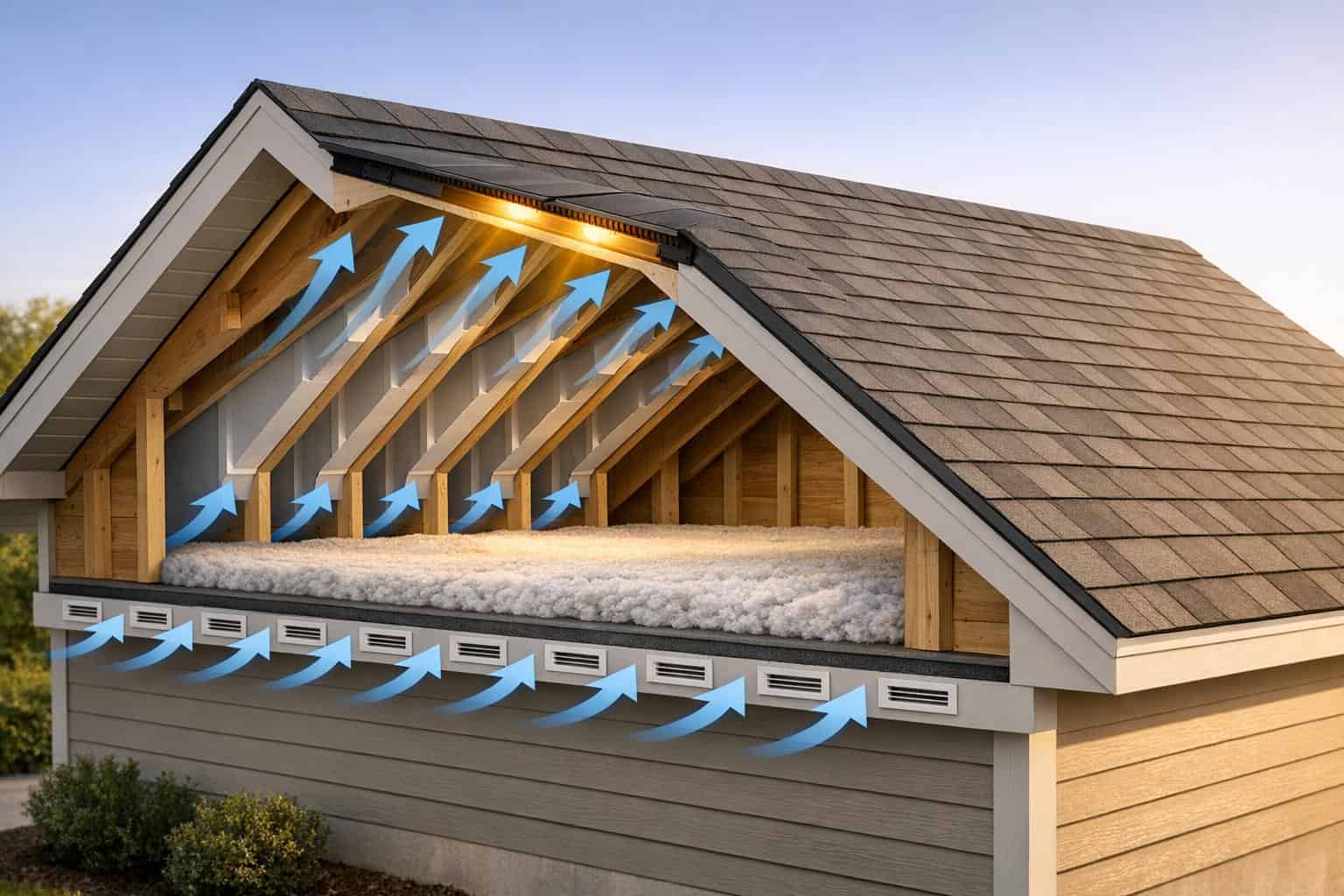
Proper roof ventilation can cut your energy bills by 10–15% during summer and protect your home year-round. Here's how it works: cool air enters through intake vents, while warm air exits via exhaust vents, keeping attic temperatures stable. Without ventilation, summer attic heat (up to 160°F) forces your AC to work harder, and winter moisture compromises insulation, raising heating costs. Poor ventilation also leads to mold, roof damage, and ice dams, causing expensive repairs.
Key takeaways:
- Summer savings: Ventilation reduces attic heat, lowering AC usage.
- Winter benefits: Prevents moisture buildup, keeping insulation effective.
- Long-term value: Extends roof and HVAC lifespan.
For best results, ensure intake and exhaust vents are balanced, with at least 1 square foot of ventilation per 150 square feet of attic space. Adding solar attic fans or ridge vents can further improve airflow and reduce energy use.
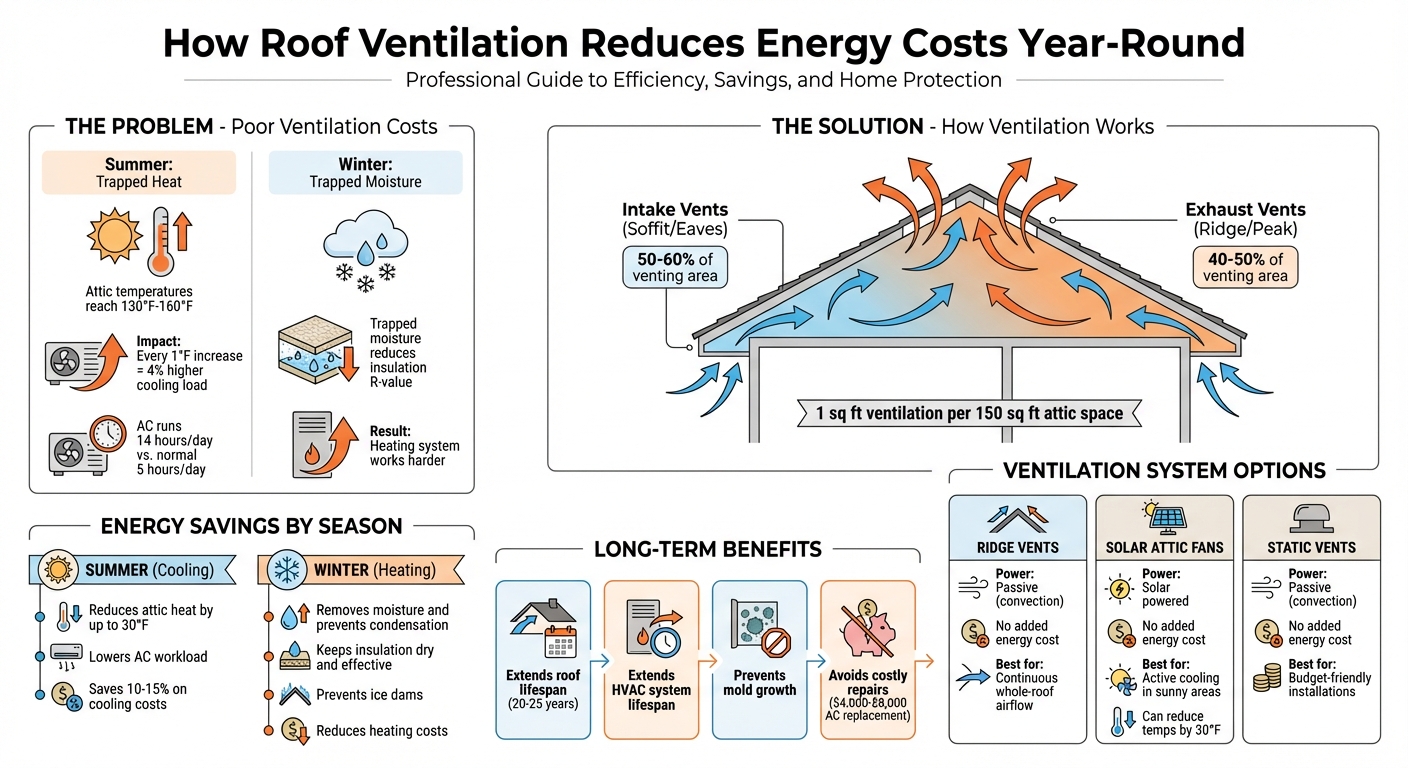
How Roof Ventilation Reduces Energy Costs Year-Round
The Science of Roof Ventilation (and Why You Need It)
sbb-itb-82bdcb5
How Poor Roof Ventilation Increases Energy Costs
Poor attic airflow can take a serious toll on your energy bills. Heat buildup, moisture issues, and faster roof wear all contribute to increased strain on your HVAC system, costly repairs, and even early replacements. Let’s break down how these problems affect your home and wallet.
Heat Buildup in Your Attic
During summer, an unventilated attic turns into a furnace, with temperatures soaring to 130°F–160°F. This heat doesn’t just stay in the attic - it radiates into your living spaces, pushing your air conditioner into overdrive. Every degree of attic temperature increase can boost your cooling load by up to 4%. Experts emphasize that proper roof ventilation is critical to keeping your home energy-efficient in extreme heat. Without it, your AC might run as much as 14 hours a day, compared to the usual 5-hour cycle. Considering that replacing a central AC system costs between $4,000 and $8,000 (averaging about $5,800), the stakes are high. But heat isn’t the only culprit - poor ventilation also encourages moisture problems that can sap energy efficiency.
Moisture Problems and Mold Growth
In winter, warm, humid air from your home rises into the attic. If ventilation is lacking, this moisture gets trapped, condensing on cold surfaces. The result? Damp insulation that loses its R-value, forcing your heating system to work harder. Signs like frost on nails or rusted fasteners often indicate excessive moisture, which can lead to wood rot in rafters and decking. Over time, these conditions create the perfect environment for mold growth, which not only impacts energy efficiency but also indoor air quality. Mold remediation can be a costly headache, adding to the financial burden.
Faster Roof Deterioration and Repair Expenses
Inadequate ventilation can "cook" your shingles, causing them to curl, crack, and lose granules prematurely. Leading manufacturers stress the importance of proper ventilation to maintain shingle longevity, and some may void warranties if ventilation is insufficient. In winter, poor ventilation traps heat, melting snow on your roof. When this water refreezes at the eaves, it forms ice dams that can force water under shingles, leading to leaks and interior damage. Between heat damage, moisture issues, and ice dam repairs, your roof’s typical 20- to 25-year lifespan can be cut dramatically short.
| Season | Ventilation Issue | Impact on Energy Costs |
|---|---|---|
| Summer | Attic heat buildup (130°F–160°F) | Higher AC usage - up to 4% increase per degree |
| Winter | Trapped moisture and condensation | Reduced insulation efficiency; harder-working heating system |
| Winter | Ice dam formation | Leads to leaks and structural damage |
| Year-Round | Overall HVAC system strain | More maintenance and early equipment replacement |
How Proper Roof Ventilation Lowers Your Energy Bills
Proper roof ventilation plays a key role in reducing energy costs. By ensuring balanced airflow, it helps keep your attic cool, which in turn reduces the strain on your heating and cooling systems.
How Intake and Exhaust Vents Work Together
A well-functioning ventilation system depends on the teamwork between intake and exhaust vents. Intake vents, typically located at the soffits or eaves, draw in cool, fresh air from outside. Meanwhile, exhaust vents, found at the ridge or peak of the roof, allow hot, stale air to escape. For optimal performance, intake vents should account for 50% to 60% of the total venting area, with exhaust vents covering the remaining 40% to 50%. Industry guidelines suggest at least 1 square foot of net free venting area for every 150 square feet of attic floor space.
"Proper ventilation mitigates that radiated heat to reduce the energy used to cool the building and to improve occupant comfort." - Asphalt Roofing Manufacturers Association (ARMA)
Lower Attic Temperatures Mean Less AC Usage
This balanced airflow system not only stabilizes attic temperatures but also significantly reduces the need for air conditioning. Without proper ventilation, attics can become heat traps, radiating warmth into your living spaces. A well-ventilated attic can lower temperatures by up to 30°F, easing the load on your air conditioner. Anthony Lang of Gorilla Roofing highlights that this can cut cooling costs by 10% to 15% during the hottest months.
Energy Savings in Summer and Winter
The energy-saving benefits of roof ventilation aren't limited to summer - they last all year. In warmer months, ventilation removes hot air, reducing the demand on your air conditioner. During winter, it expels warm, humid air, preventing condensation on cold surfaces. This keeps insulation dry, preserving its R-value and ensuring your heating system doesn't have to work overtime. Additionally, proper ventilation minimizes the risk of ice dams by maintaining a consistent roof deck temperature, stopping snow from melting and refreezing at the eaves.
Here's a quick look at the seasonal benefits:
| Season | Primary Goal | Energy Impact |
|---|---|---|
| Summer | Expel hot air (up to 160°F) | Reduces AC workload; lowers cooling costs by 10–15% |
| Winter | Remove moisture and prevent ice dams | Keeps insulation dry; prevents heat loss |
| Year-Round | Regulate temperature and humidity | Extends HVAC and roof lifespan |
Types of Roof Ventilation Systems That Save Energy
Selecting the right roof ventilation system can make a big difference in energy efficiency, especially when tailored to your roof's design and cooling needs. From passive systems to solar-powered solutions, each option brings its own strengths to the table.
Ridge Vents for Steady Airflow
Ridge vents are installed along the peak of your roof, allowing hot air to escape naturally through convection. When covered with shingles, they blend into the roofline for a clean, seamless look. To maximize efficiency, ridge vents should be paired with soffit vents, creating a balanced intake-exhaust cycle. For those in snowy areas like Colorado, specialized ridge vents, such as the Cobra Snow Country, are designed to maintain airflow while preventing snow infiltration.
"Ridge vents occupy the highest peak atop your home... Since hot air rises, it makes sense to expel and ventilate from a spot like this." - Rapid Roofing
Solar Attic Fans That Run Without Electricity
Solar attic fans use photovoltaic panels to power a motor, removing hot air without increasing your electric bill. These fans are especially effective in sunny climates, like Colorado, where they can reduce attic temperatures by as much as 30°F. Unlike traditional power vents that rely on electricity, solar attic fans are entirely solar-powered. They are most effective during the hottest summer months, when air conditioning systems are under the most strain. Plus, installation costs may be offset by federal energy tax credits. Old World Roofing offers solar attic fan installation for homeowners in Colorado Springs and Pueblo, making energy-efficient upgrades more accessible.
Static Vents for Simple Air Circulation
Static vents, often referred to as box or turtle vents, are a cost-effective option for attic ventilation. These non-mechanical vents rely on natural airflow and wind to expel warm air. While they’re smaller than ridge vents and may require multiple units for larger attics, they are highly durable and require little to no maintenance. As with other systems, combining static vents with soffit vents is key to creating an effective airflow cycle.
| Vent Type | Power Source | Energy Cost | Best For |
|---|---|---|---|
| Ridge Vents | Passive (Convection) | No added cost | Continuous whole-roof airflow |
| Solar Attic Fans | Solar Power | No added cost | Active cooling in sunny areas |
| Static Vents | Passive (Convection) | No added cost | Budget-friendly installations |
When paired with other energy-saving upgrades, these ventilation systems can help reduce energy consumption and improve overall home comfort.
Pairing Ventilation with Other Energy-Saving Upgrades
Combining proper ventilation, high-quality insulation, and solar-powered solutions can help lower heating and cooling costs while keeping indoor temperatures consistent.
Why Attic Insulation Matters
Ventilation and insulation are a team. Ventilation helps remove excess heat and moisture from the attic, while insulation acts as a barrier, stopping heat from moving between your attic and living areas.
Before adding insulation, make sure the attic floor is sealed tightly to avoid losing conditioned air.
"At first it may seem odd to add insulation for warmth and then purposely allow cold air to enter the attic through vents, but this combination is the key to a durable and energy-efficient home." - ENERGY STAR
When installing insulation, don't forget to use rafter vents (also called baffles) at the eaves. These ensure that insulation doesn't block airflow between soffit vents and exhaust vents. Old World Roofing provides blown-in insulation services, ensuring ventilation and insulation systems work together seamlessly for homeowners in Colorado Springs and Pueblo.
Adding solar attic fans takes this system a step further by actively removing lingering heat.
Adding Solar Attic Fans for Better Results
Solar attic fans improve ventilation by actively expelling hot air when the sun is at its peak - precisely when your attic gets the hottest. The best part? They run entirely on solar power, meaning no operating costs. These fans are especially effective in sunny areas like Colorado, where they help lower attic temperatures.
Because solar fans operate during the sunniest hours, they avoid pulling in humid air at night or during rainy weather. However, for these fans to work efficiently, your attic ceiling must be well-sealed, and you need enough intake vents at the soffits. Without adequate intake ventilation, the fan won't perform as it should.
A well-ventilated attic can cut cooling costs by 10–15% during the summer's peak heat. By combining passive ventilation (such as ridge and soffit vents) with active solar fans and proper insulation, you create a system that not only protects your roof but also extends your HVAC system's life and reduces energy bills year-round.
How to Check and Improve Your Roof Ventilation
Calculating Your Ventilation Requirements
Start by measuring your attic's square footage. The general guideline is 1 square foot of ventilation for every 150 square feet of attic space. If your attic has a vapor retarder and at least 50% of the exhaust vents are positioned 3 feet or more above the intake vents, you can reduce this to 1 square foot per 300 square feet. To calculate, divide your attic's area by 150 (or 300, depending on your setup) to determine the total vent area needed. Split this evenly between intake vents (like soffit or eave vents) and exhaust vents (such as ridge, gable, or box vents).
To check if your ventilation is working, monitor your attic on a hot day. If temperatures exceed 130°F or you notice ice dams during winter, it’s a sign your system might need improvement.
Getting a Professional Roof Inspection
Once you've calculated your ventilation needs, a professional inspection can uncover any hidden problems. Certified roofing experts can identify issues like mold, wood rot, blocked soffit vents, or uneven airflow that may not be obvious to homeowners. During an inspection, professionals typically:
- Measure attic temperature and humidity levels.
- Check for debris or pest blockages in vents.
- Ensure insulation hasn’t obstructed intake vents.
- Confirm compliance with local building codes.
For example, Old World Roofing provides free inspections in Colorado Springs and Pueblo. Their team evaluates your entire ventilation system and offers tailored solutions suited to Southern Colorado's climate and your home’s design.
Installation and Ongoing Maintenance
After confirming your system’s needs, proper installation and regular maintenance are key to keeping it efficient. Rafter vents, also known as insulation baffles, should maintain at least 2 inches of space between the insulation and roof sheathing to allow air to flow freely from the eaves to the ridge. Be careful not to mix different types of exhaust vents - combining a ridge vent with a powered fan, for instance, can disrupt airflow and leave parts of your attic unventilated.
Annual cleaning of vents is essential to clear out debris or blockages. For powered fans, ensure there’s 1 square foot of intake for every 300 CFM to prevent them from pulling conditioned air out of your home. If you notice unexplained spikes in energy bills or recurring ice dams, it’s a good idea to schedule a professional inspection. These steps help maintain proper airflow, which can directly lower energy costs over time.
Conclusion
Proper roof ventilation is an effective way to cut energy costs and protect your home year-round. By maintaining balanced airflow between intake and exhaust vents, homeowners can reduce cooling expenses by 10–15% during summer while preventing moisture-related issues that impact heating efficiency in winter.
Ventilation also protects your roof by minimizing extreme attic heat that can damage shingles and reducing the strain on your HVAC system.
This is especially important in climates with dramatic temperature changes, like Southern Colorado. Here, proper roof ventilation does more than just save energy - it prevents ice dams that can lead to water damage, eliminates uneven heating in upper-floor rooms, and ensures consistent indoor temperatures without overburdening your air conditioner or furnace. As Anthony Lang from Gorilla Roofing points out:
"Roof ventilation affects your home's comfort and your energy bills every single month of the year".
If you’re noticing higher energy bills, musty odors in your attic, or ice buildup on your roof, it’s time to assess your ventilation system. Start by calculating your attic's square footage and ensuring there’s at least 1 square foot of ventilation for every 150 square feet of space. Check for blockages in soffit vents and confirm that your intake and exhaust vents are properly balanced. These simple steps can lead to long-term savings and better home protection.
Old World Roofing provides free inspections in Colorado Springs and Pueblo to help homeowners ensure their ventilation systems are up to par. Their team specializes in solutions tailored to Southern Colorado's unique climate. By addressing your roof ventilation now, you can enjoy lower energy bills, a longer-lasting roof, and a more comfortable home for years to come.
FAQs
What are the signs of poor roof ventilation?
Poor roof ventilation can create a range of problems that are hard to ignore. You might notice hot, uncomfortable rooms, especially on the upper floors. Other warning signs include peeling paint or warped wood, often caused by trapped moisture, and damaged shingles or attic materials, which can result from heat building up under the roof. These issues don't just make your home less comfortable - they can also drive up energy costs and shorten the lifespan of your roof.
If you're seeing any of these signs, it's crucial to take action quickly. Improving airflow through proper roof ventilation can help stabilize indoor temperatures, protect your home's structure, and even lower energy bills by easing the load on your HVAC system.
How do solar attic fans help lower energy bills?
Solar attic fans can cut down on energy costs by reducing heat accumulation in your attic, which lessens the strain on your HVAC system. By boosting airflow, these fans help keep indoor temperatures more stable, particularly during scorching summer days. They also combat moisture buildup, which can safeguard your roof and help it last longer. Powered by solar energy, these fans operate without increasing your electricity bill, offering an efficient and environmentally friendly option.
How does proper roof ventilation help prevent ice dams during winter?
Proper roof ventilation plays a key role in stopping ice dams from forming. It works by allowing warm, moist air trapped in your attic to escape. Without this ventilation, the warm air heats up the underside of your roof, causing snow on top to melt. As the melted snow flows down and reaches the colder edges of your roof, it refreezes, creating ice dams.
Good ventilation ensures consistent roof temperatures and keeps air moving, which reduces the chances of ice dams. This not only protects your home from water damage but also saves you from expensive repairs. Ensuring your roof is well-ventilated is a practical step to keep your home safe during winter.